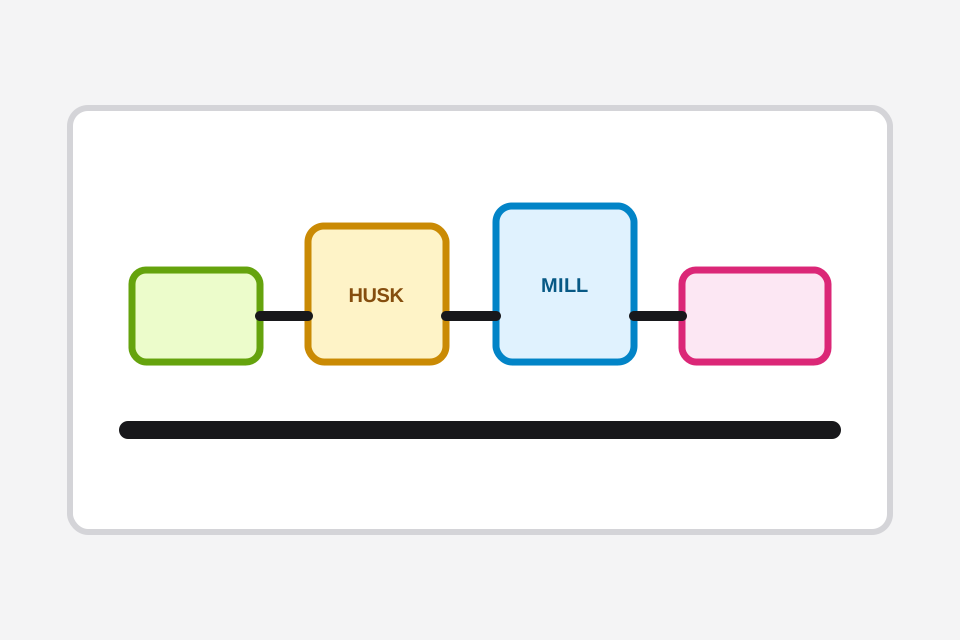
A useful machinery quotation starts with process details, not just a product name. Prepare material photos, target output, local utilities and workflow notes before asking for model and price.
Buying guide
Start with material, output and site constraints
Machinery quotations become more useful when the buyer sends enough process context. Raw material, target output, voltage, destination country, available floor space and downstream handling all influence machine selection.
This guide explains how to prepare clearer quotation requirements for B2B machinery buyers.
Workflow Process
Quotation preparation checklist
Describe the raw material
Send material name, photos, size range, moisture condition and impurity level.
Define target output
Share hourly or daily output target and whether the workflow is batch or continuous.
Confirm utilities and layout
Prepare voltage, phase, water, drainage, heating method, ventilation and floor-space notes.
Explain downstream process
Clarify packing, storage, further grinding, frying, drying or other matched equipment needs.
FAQ Accordion
Quotation FAQ
Why are material photos useful?
Photos help the sales and engineering team understand feed size, cleanliness, shape and handling difficulty before model discussion.
Should I ask about a single machine or complete line?
Ask based on workflow. If the machine must connect with upstream or downstream equipment, describe the complete process.
Inquiry Support
Prepare a clearer machinery inquiry
Send material, output, voltage, destination, floor space and downstream process details before requesting a quote.
Send requirements